
Meal Planning 101: A Simpler Approach to Balanced Eating


Meal planning does not need to look like perfectly portioned containers lined up in your refrigerator or spending your entire Sunday cooking complicated recipes.
At its core, meal planning is simply creating a little more structure around your meals so healthy choices feel easier during busy weeks.
For many people, meal planning can help:
reduce stress around food
save time and money
support balanced eating habits
reduce takeout and impulse purchases
support wellness and weight management goals
And importantly — it does not need to be perfect to be helpful.
Why Meal Planning Works
One of the biggest reasons meal planning helps people stay more consistent is because it reduces decision fatigue.
When we are stressed, tired, busy, or overwhelmed, making repeated food decisions throughout the day can become mentally exhausting. Planning even a few meals ahead of time can help simplify those decisions.
Some research has even found that proactive meal planning is associated with healthier dietary patterns and lower obesity risk over time. Research on Meal Planning and Obesity Risk
Meal planning is not about perfection.
It is about making balanced choices feel more manageable and realistic for everyday life.
Start with Simple Meal Planning
One of the biggest mistakes people make is trying to overhaul everything at once.
Instead of planning every meal perfectly, try starting with:
2–3 dinners for the week
a few protein-focused breakfast options
easy snacks you enjoy
simple grocery staples
The simpler your system feels, the more sustainable it usually becomes.
Mayo Clinic Press also emphasizes that meal planning does not need to mean cooking and portioning every meal for the entire week. It can be as simple as creating a practical plan that makes balanced eating easier during busy days.
Build Meals Around Protein
One easy way to make meals feel more balanced and satisfying is by prioritizing protein.
Protein may help support:
satiety
energy
muscle maintenance
recovery
healthy aging
balanced body composition
Research continues to show that adequate protein intake may also help preserve lean muscle mass during weight loss and calorie deficits. 2024 Meta-Analysis on Protein Intake and Muscle Preservation
Many adults focused on wellness or healthy aging may benefit from aiming for roughly:
100–120 grams daily
or approximately 1.2–2.0 g/kg/day depending on goals and activity level
The good news is that this becomes much easier when protein is spread throughout the day instead of trying to eat huge amounts all at once.
If you want a deeper breakdown on protein intake, you may also enjoy:
Helpful Meal Planning Shortcuts
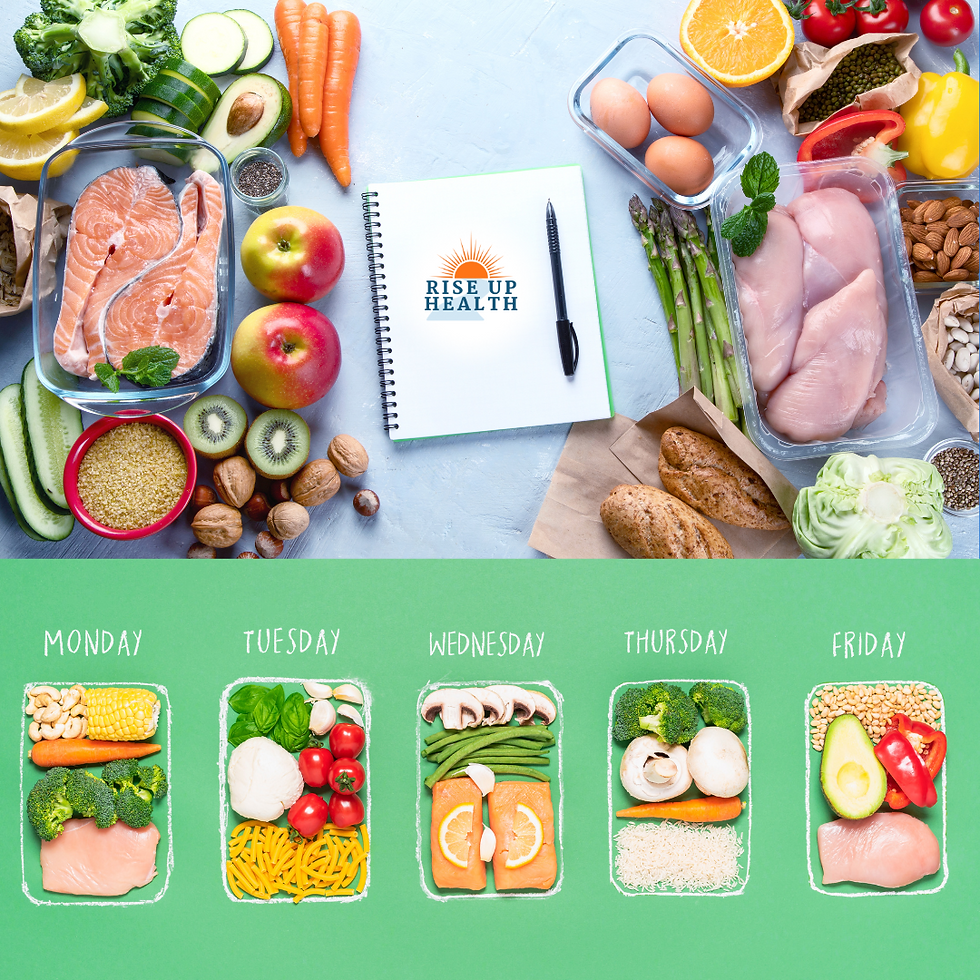
Meal planning becomes much easier when you simplify your system.
Some realistic shortcuts include:
batch cooking protein for multiple meals
using frozen vegetables
repeating a few favorite meals each week
prepping overnight oats or yogurt bowls ahead of time
keeping protein shakes or convenience foods available for busy days
Balanced eating does not require gourmet cooking.
Consistency usually matters far more than perfection.
AI Can Help Simplify Meal Planning
AI meal planning tools can also help reduce overwhelm and simplify grocery shopping.
You can ask AI tools to:
build grocery lists
create meal plans
estimate protein intake
use ingredients you already have
simplify recipes
create budget-friendly meal ideas
Related article:
Meal Planning and Weight Loss
Meal planning can also support sustainable weight management because it helps create more awareness around:
portions
protein intake
convenience foods
grocery habits
eating patterns
The goal is not strict dieting.
Instead, meal planning can help create more balanced routines that feel realistic for busy adults.
You may also enjoy:
Final Thoughts
Meal planning does not need to feel rigid, complicated, or overwhelming.
Even small habits — like planning a few meals ahead, prepping protein, or simplifying grocery shopping — can make healthy eating feel more manageable over time.
At Rise Up Health, we believe wellness should support real life, not take it over.


Comments